
Section 4: Educational Planning
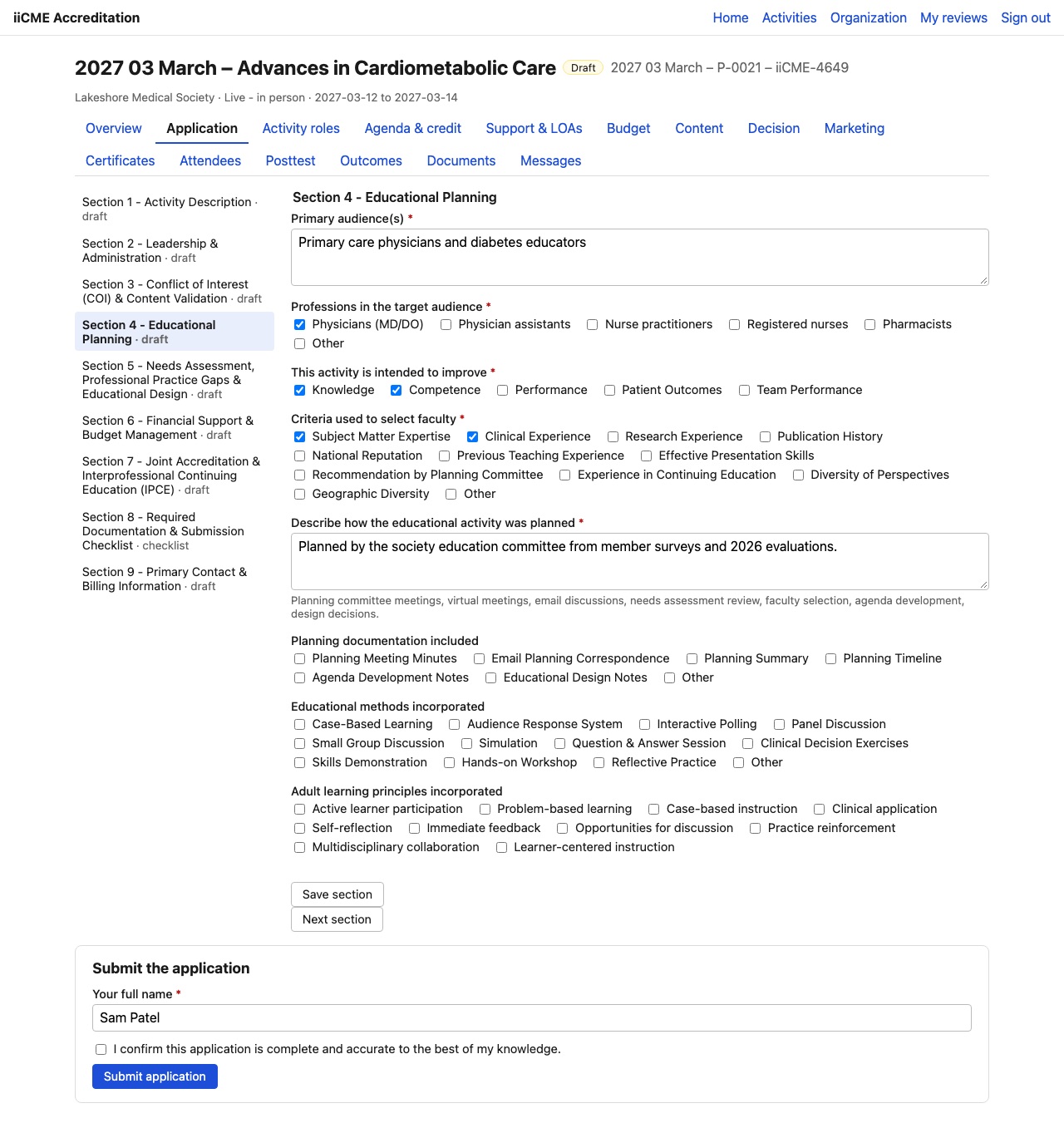
- Primary audience(s), and professions in the target audience (physicians, PAs, NPs, RNs, pharmacists, other)
- This activity is intended to improve: knowledge, competence, performance, patient outcomes and/or team performance
- Criteria used to select faculty, for example subject matter expertise, clinical experience or teaching experience
- Describe how the activity was planned: planning meetings, needs assessment review, faculty selection, agenda development and design decisions
- Planning documentation included, for example meeting minutes or a planning timeline
- Educational methods (case-based learning, polling, panel discussion, Q&A and others) and adult learning principles used
Section 5: Needs Assessment, Professional Practice Gaps & Educational Design
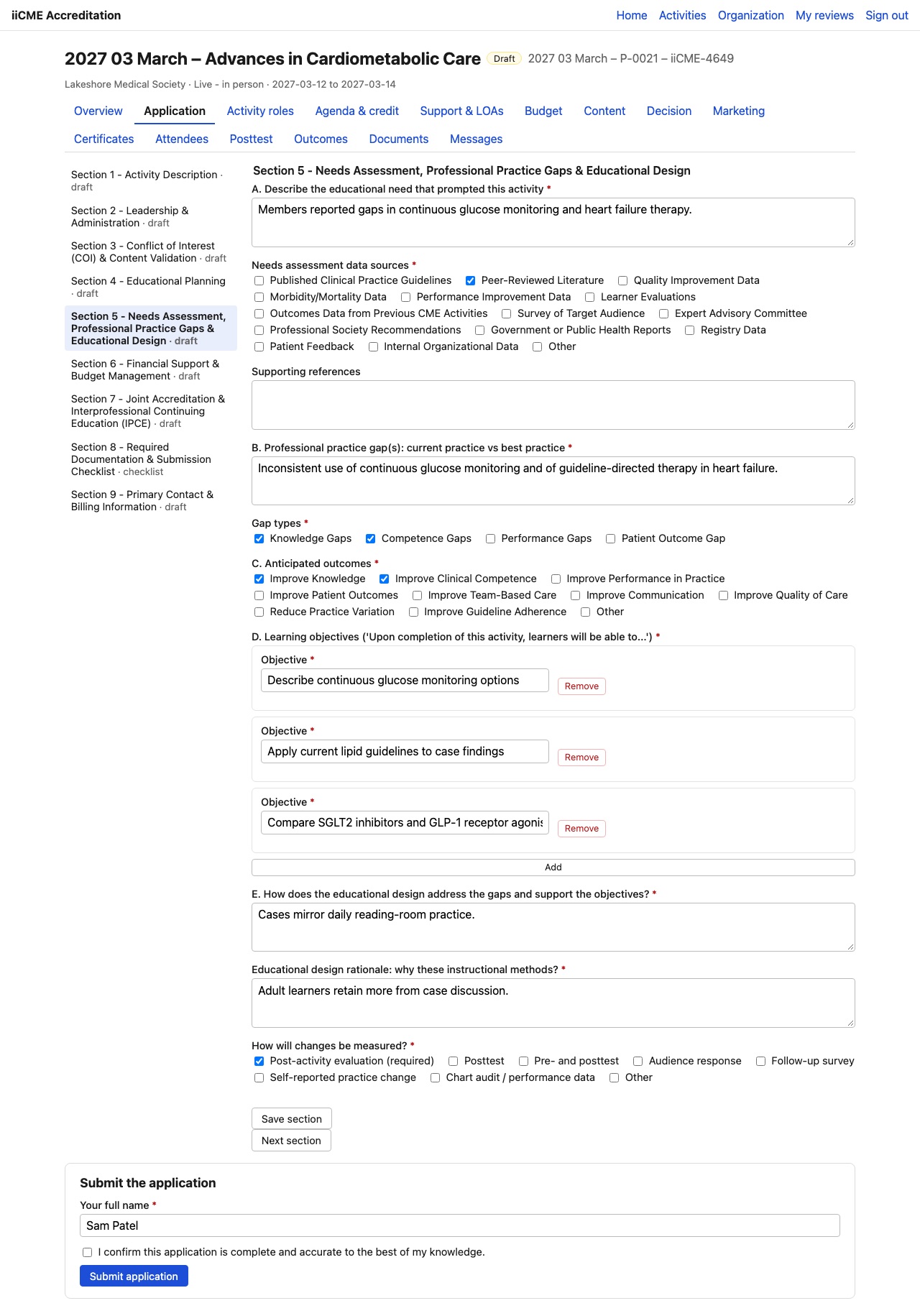
- A. The educational need that prompted the activity, the needs assessment data sources (guidelines, literature, quality data, learner evaluations, surveys and others) and supporting references
- B. The professional practice gap(s): current practice compared with best practice, and the gap types (knowledge, competence, performance, patient outcomes)
- C. Anticipated outcomes
- D. Learning objectives, each completing the sentence “Upon completion of this activity, learners will be able to…”. Click Add for more objectives. Use measurable verbs such as describe, apply or compare. The portal warns you about verbs that are hard to measure, such as understand.
- E. Educational design: how the design addresses the gaps, why these methods were chosen, and how changes will be measured. A post-activity evaluation is always required; you can add a posttest, audience response, follow-up survey and others.
Section 6: Financial Support & Budget Management
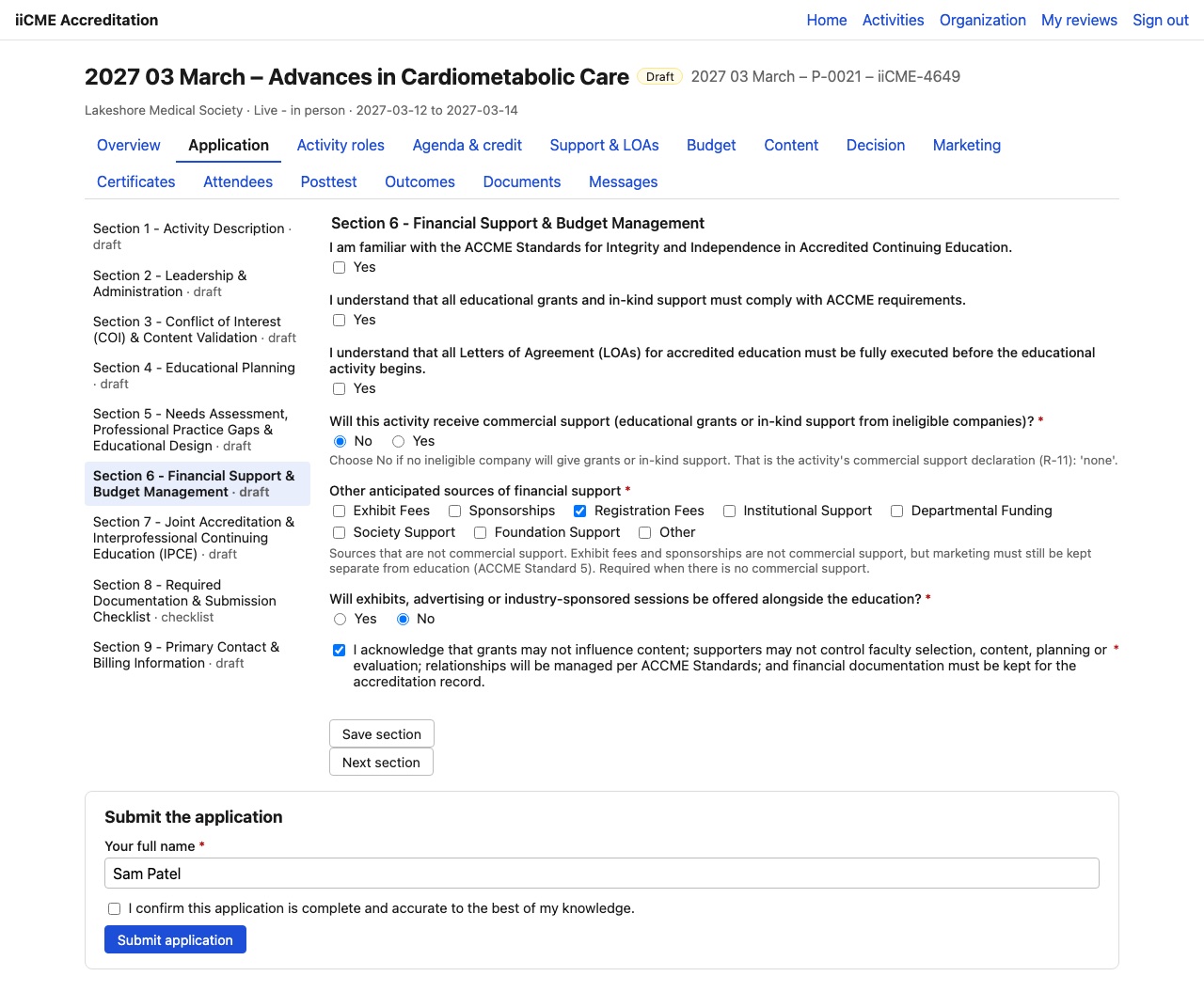
- Confirm the three acknowledgments: you are familiar with the ACCME Standards for Integrity and Independence; grants and in-kind support must comply with ACCME requirements; and every Letter of Agreement must be fully executed before the activity begins.
- Anticipated sources of financial support: educational grants, exhibit fees, sponsorships, registration fees, institutional or society support, in-kind support and others. Exhibit fees and sponsorships are not commercial support, but marketing must still be kept separate from the education.
- Will exhibits, advertising or industry-sponsored sessions be offered alongside the education?
- The independence acknowledgment: supporters may not influence content, faculty selection, planning or evaluation.
The supporters themselves and their amounts are entered on the Support & LOAs tab: see How to declare commercial support and track Letters of Agreement.
Continue with Planning application, part 3: Sections 7 to 9 and submitting.
Need help?
Send a message from the activity’s Messages tab, or email the iiCME Accreditation Team at client.support@iicme.com. For the full series, see Accreditation Portal guide: start here.
Screenshots show a fictional demonstration organization, “Lakeshore Medical Society.” Your portal shows your own organization and activities.